
July 2026 marks the twelfth anniversary of the opening of the Mitrokhin Archive at the Churchill Archives Centre, University of Cambridge — one of the most remarkable intelligence collections in modern history.
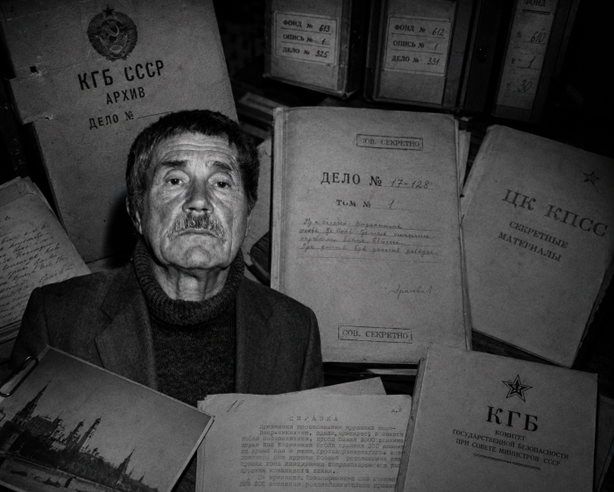
Vasili Mitrokhin was a KGB (Soviet Committee for State Security) archivist who spent decades secretly copying thousands of classified Soviet intelligence files before defecting to the West in 1992. The archive he brought with him, covering KGB operations spanning from the 1930s to the 1980s, became the basis for landmark publications by historian Christopher Andrew, co-authored with Mitrokhin himself. Since opening to researchers in 2014, the archive has transformed our understanding of Cold War espionage.
Recent research into this collection has explored a perhaps unexpected angle such as nuclear signalling. The work formed part of a dissertation examining whether Russia’s nuclear rhetoric during the Cold War represented genuine strategic culture or deliberate manipulation and whether that same pattern has resurfaced since Russia’s invasion of Ukraine in 2022.
The Mitrokhin Archive proved invaluable for the historical dimension of the research. Two case studies sat at the heart of this enquiry. The first was Operation RYAN (an acronym from the Russian for “Nuclear Missile Attack”), a vast KGB intelligence-gathering programme launched in 1981 to detect signs of a surprise NATO nuclear first strike. RYAN revealed the extraordinary degree to which Soviet leadership genuinely feared Western attack — a fear that shaped nuclear posture and communication in ways that went far beyond political theatre.
The second case study was the neutron bomb controversy of the late 1970s. When the United States considered deploying enhanced radiation weapons in Europe, the Soviet Union launched an intensive propaganda effort to prevent it. The archive sheds light on how the KGB coordinated this campaign — not through open diplomacy, but through active measures.
Active measures were a defining feature of Soviet intelligence work: covert operations designed to shape foreign opinion and policy, including forgeries, front organisations, and disinformation campaigns spread through sympathetic media and political movements. Mitrokhin documented these operations in considerable detail, and they proved directly relevant to understanding how the Soviet Union sought to influence Western nuclear debates, and how similar techniques may echo in contemporary Russian information warfare.
The archive’s relevance, twelve years on, feels sharper than ever. As nuclear rhetoric once again occupies the headlines, collections like this one remind researchers, and the public, that the language of nuclear deterrence has never been purely military. It has always also been a space for manipulation, fear, and calculated ambiguity.
Diana Kuznetsova, MA Student in Intelligence and International Security at King’s College London. MA dissertation: “Strategic culture or strategic manipulation? Russia’s Nuclear Signalling in the Cold War (1970s–80s) and the War in Ukraine (since 2022).”