

By Zachary Kuntz, PhD candidate in History at the University of South Florida. This blog draws on archival research for his dissertation, “Higher Education—A Soft Power Gambit: U.S. and Soviet Ideological Conflict in Cold War Ecuador, 1945–1970”, conducted at Churchill Archives Centre.
On 2 June 1988, Iosif Grigulevich—by then a respected historian at the Institute of Ethnography of the USSR Academy of Sciences—passed away in Moscow. Few could have imagined that this quiet academic had once been one of the most successful deep‑cover illegals in the history of Soviet espionage. Long before he became a scholar of the Catholic Church, Grigulevich had been celebrated within Soviet intelligence circles as the “ace of Soviet espionage.”
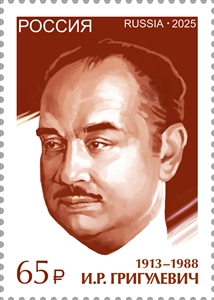
For more than seventeen years, Grigulevich operated across Latin America under false identities, cultivating friendships with some of the region’s most iconic cultural figures, including Pablo Neruda, David Alfaro Siqueiros, and Benjamín Carrión. He even married Laura Aguilar Araujo, a member of the Mexican Communist Party, to strengthen his cover. His activities ranged from political work with Latin American communist parties to direct participation in major covert operations. He assisted in the assassination attempt on Leon Trotsky (Operation DUCK), recruited local communists for sabotage missions against Nazi Germany from five Latin American ports (Operation D), and fought in the Spanish Civil War—where, as one of the few Spanish‑speaking Soviet operatives to survive the Great Terror, he served as a translator and took part in combat at Madrid and Jarama. He was even recruited by Alexander Orlov for Operation NIKOLAI, the capture and assassination of Andrei Nin.
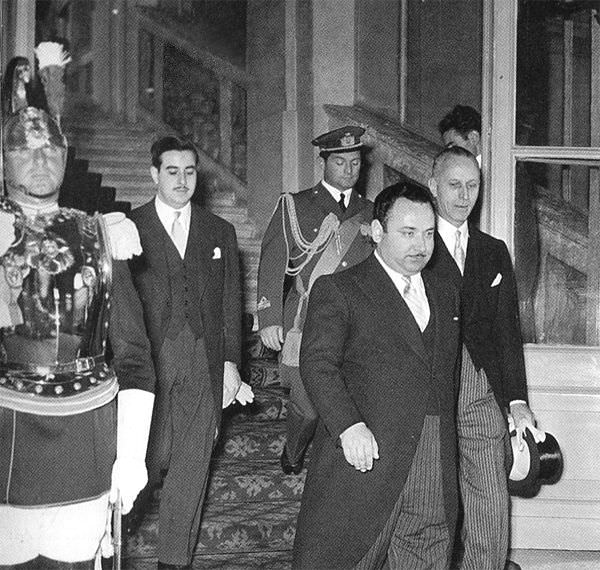
By 1948, Grigulevich received a new legend: Teodoro B. Castro, a Costa Rican coffee magnate. His mission was extraordinary—penetrate the Holy See. In Rome, he befriended Pope Pius XII and members of the Costa Rican delegation, including José Figueres, Daniel Oduber, and Francisco Orlich, all future presidents of Costa Rica. His cover was so effective that he became the first Soviet illegal to hold diplomatic posts for three countries simultaneously. In 1951, he even addressed the United Nations on behalf of Costa Rica. His performance was so convincing that Andrei Vyshinsky, leading the Soviet delegation, dismissed him as an American “lapdog,” unaware he was criticizing one of his own operatives.
In 1953, Grigulevich was abruptly recalled to Moscow. His espionage career was over. A new life awaited him—academia. He earned his Doctorate of Historical Sciences and wrote The Vatican: Religion, Finance, and Politics, drawing heavily on materials he had accessed while undercover in Rome. By 1961, he helped establish the Institute of Latin American Studies (ILA) of the USSR Academy of Sciences, later working within the Institute of Ethnography.
The ILA’s mission was threefold: to deepen Soviet understanding of Latin America’s social and political landscape; to interpret the region through Marxist analysis; and to develop concrete policy recommendations. Under Grigulevich’s influence, the ILA became central to shaping Soviet foreign policy in Latin America. By 1969, the USSR had signed trade agreements with Ecuador, Peru, and Uruguay—an achievement rooted in the networks and insights Grigulevich had cultivated during his years as an illegal.
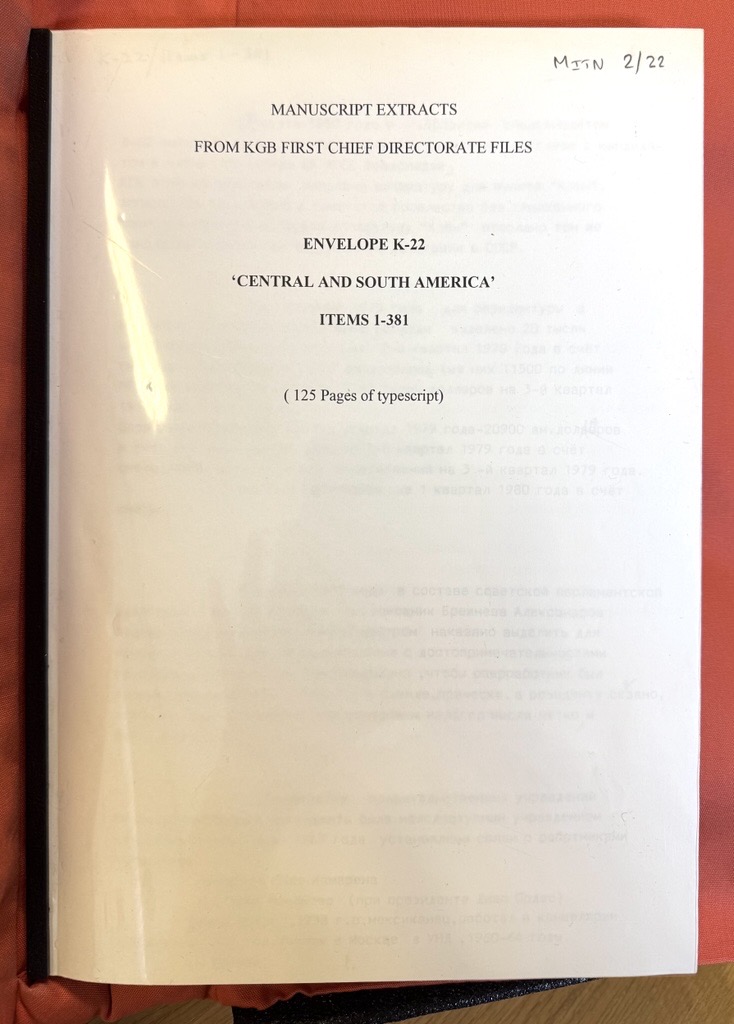
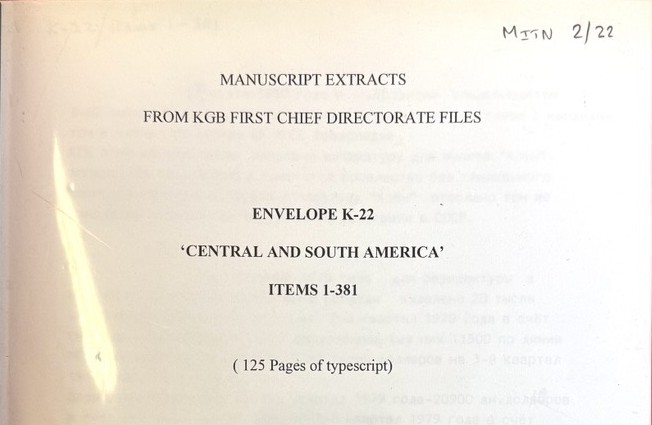
Yet the full story of his clandestine life remained hidden until 1992, when Vasili Mitrokhin defected to the West. Only through the Mitrokhin papers did the true scale of Grigulevich’s espionage career come to light—four years after his death. These files allow us to retrace his hidden footsteps and reveal the remarkable dual identity of a man who shaped Soviet policy in Latin America both as a spy and as a scholar.
His story is still incomplete. But thanks to the Mitrokhin papers preserved at the Churchill Archives Centre, we can finally begin to understand the most successful spy‑turned‑academic in Soviet history.
Further Reading
Andrews, Christopher and Vasili Mitrokhin. 1999. The Sword and the Shield: The Mitrokhin Archives and the Secret History of the KGB. New York: Basic Books.
Chikov, V.M. 2009. Nash chelovek v Vatikane, ili, Posol chuzhoǐ strany. [Our Man in the Vatican, or an Ambassador of a Foreign Country]. Moscow: Kuchkovo Field.
Efimova, A.V. I.R. Grigulevich, and V.M. Goncharova, eds. 1963. Ekvador. Istoriko-etnograficeskie ocherki [Ecuador: Historical and Ethnographic Essays]. Moscow: Publishing House of the USSR Academy of Sciences.
Paporov, Yuri. 2004. Akademik Nelegal’nykh Nauk [Academician of Illegal Sciences]. Moscow: Neva.
Ross, Majorie. 2006. El secreto Encanto de la KGB: las cinco vidas de Iosif Grigulevich [The Secret Charm of the KGB: the five lives of Iosif Grigulevich]. Colombia: Carajal Education.
Znamenski, Andrei. 2017. “Joseph Grigulevich: A Tale of Identify, Soviet Espionage, and Storytelling.” Soviet and Post-Soviet Review. 44 (3): 314-341