By Dr James Greenhalgh, Archives By-Fellow, Michaelmas Term 2025.
During Michaelmas Term 2025 I’ve been lucky enough to visit Churchill College as the Archives By-Fellow, an appointment supported both through the generosity of the College and with a grant from the Churchill Fellowship.
The principal purpose of my time has been to use several of the archive’s collections to inform elements of a forthcoming project Thinking with Data, which colleagues and I are working on over the next year. The project examines how, when and why key components of Britain’s public sector began to ‘think with data’ during the twentieth century.
Data collection was, of course, not unique to the twentieth century, but the postwar period witnessed a significant expansion in the scope and capacity of the state to collect, analyse and, ultimately, store large quantities data as an increasingly common aspect of the policy-making process.
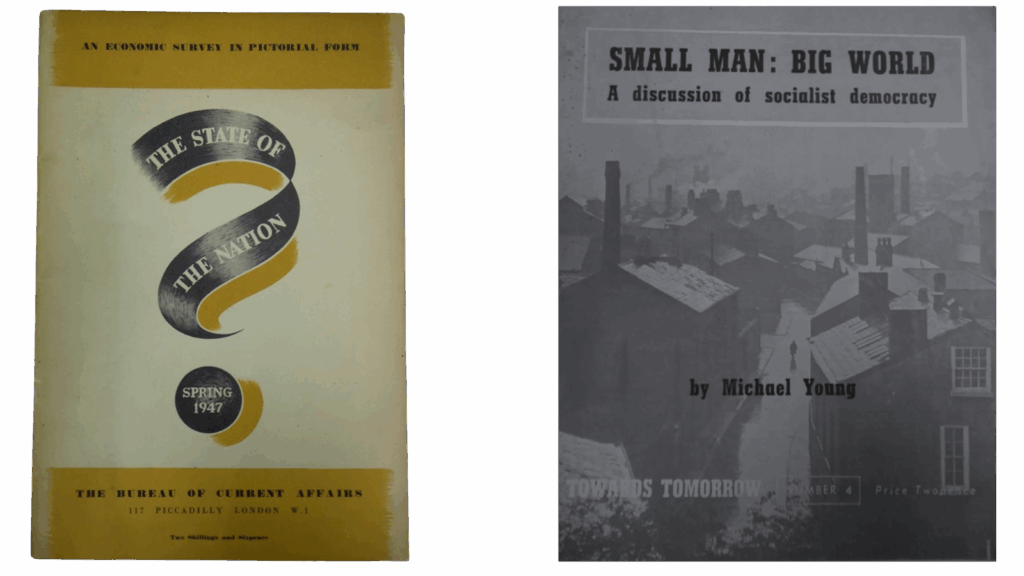
The section of this work I planned to do at Churchill Archives Centre was to examine this process in the very immediate postwar period, as a facet of sociologists’ work. I have been looking at the emergence of classes of experts, technocrats and consultants who embedded themselves within the apparatus of the state as the systems and machines that facilitated the mass analysis and retention of data were emerging after the War.
Although I had already spent some time at Churchill Archives Centre scoping the feasibility of the research, the specific direction that I have taken only emerged once I was in the archive and began to work through the papers of Mark Abrams and Michael Young. With both the time the Fellowship allows for research and the world-class access to secondary material in the University holdings, a number of themes have emerged for further investigation.
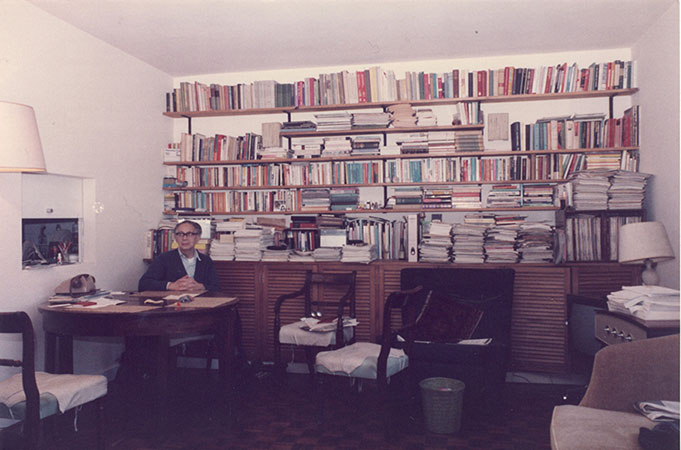
It is apparent from their work that sociologists of Abrams’ and Young’s type were dealing both with the practicalities of how large bodies of data might be collected and used in governmental decision making – especially with regards to the shape of the merging Welfare State – whilst also conceptualising the differing intellectual traditions into which they saw their work fitting. This strand will form the basis for a forthcoming article.
Alongside this a number of other themes concerning the problems of framing of data collection projects, the presentation of research to popular audiences, and the emerging idea of the ‘data subject’ will all provide avenues for the wider project.
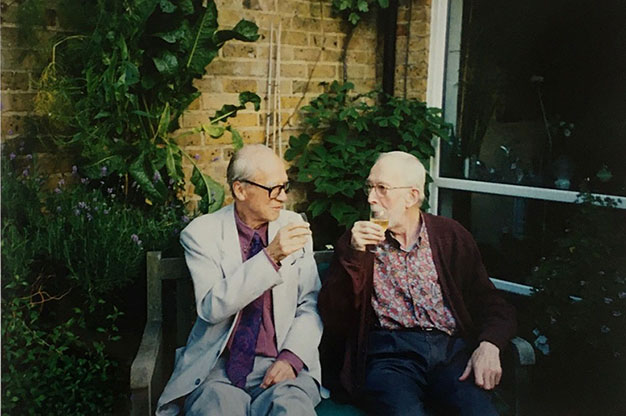
The value of the Fellowship goes far beyond the immediate benefits of time and proximity to the archive, and Churchill and Cambridge more broadly provide an exceptionally rewarding environment in which to be a researcher. Given the considerable library holdings, it is a great place to simply write all the reviews and articles one has been putting off during teaching.
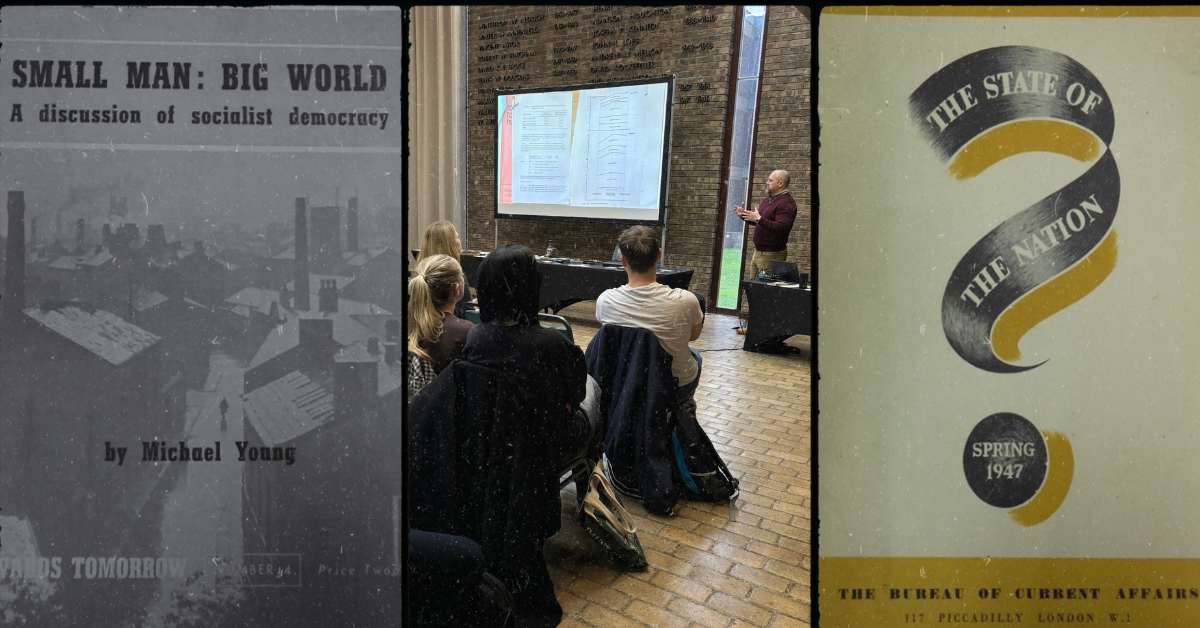
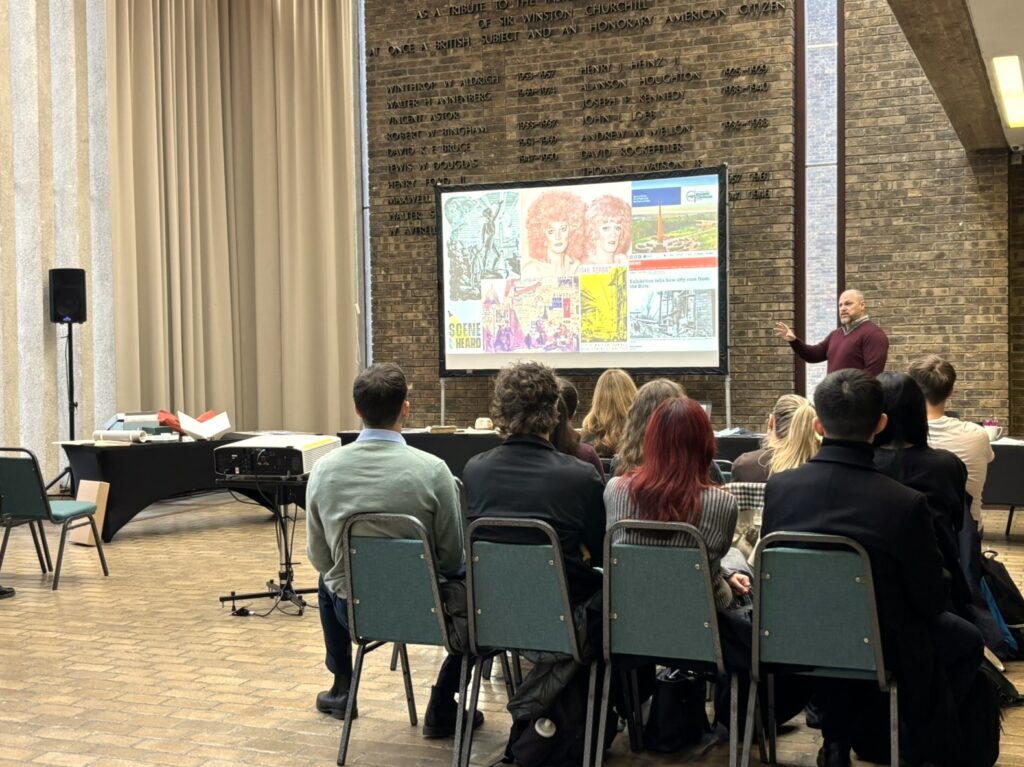
The University also provides the opportunity to engage with a considerable number of papers and seminars, and I have even been fortunate enough to present the ongoing archival work to the very enthusiastic Modern British MPhil students.
The College itself is a warm and welcoming environment, where you are invited – not least due to a significant allowance for meals as part of the fellowship – to involve yourself in a community that offers both sociability and intellectual stimulation.
Most importantly, as the Archives By-Fellow you are in the privileged position to get to know and be guided by Churchill’s team of archivists. They have provided direction in what areas of the collections might be most useful, explained how papers are catalogued and organised, and – as published scholars themselves – provided illuminating advice on the use of different types of evidence, informed by their own expertise.
If anyone reading this is thinking of applying, I’d be happy to have a chat about the Fellowship and how I approached it, just email me at my Lincoln address.